AI Video Magic: Creating a Robot Violinist with Happy Dog Interaction Using Image-to-Video Tech
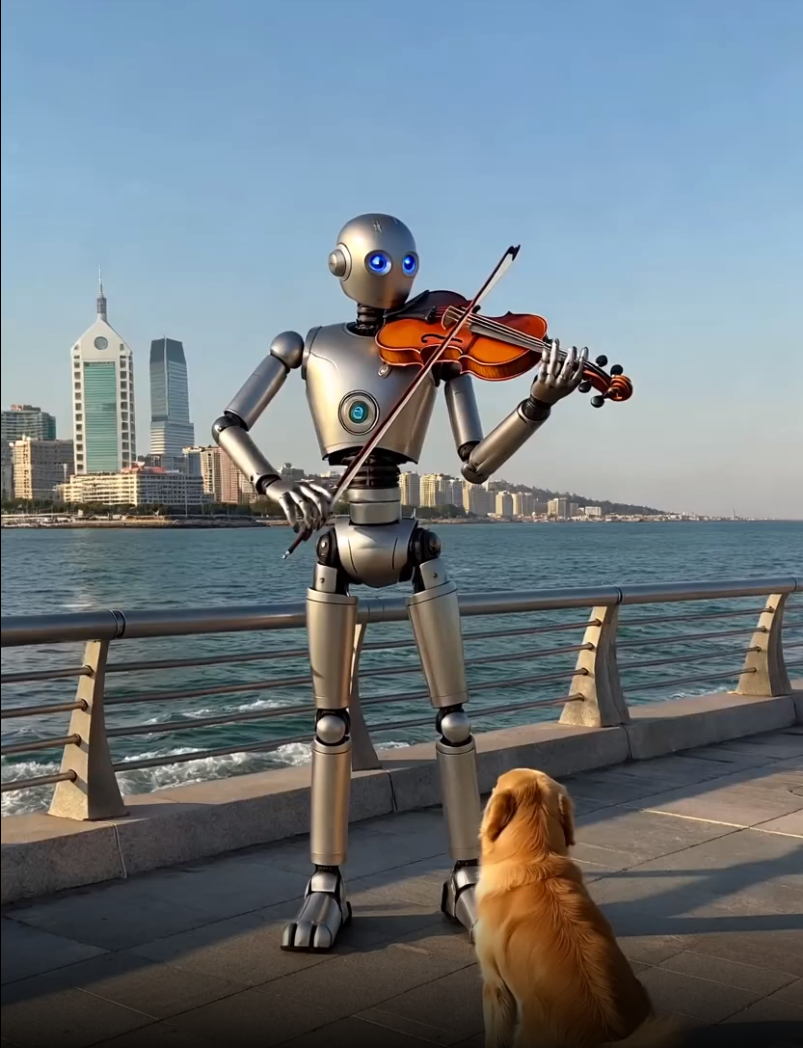
In the realm of digital creativity, the advent of image-to-video technology has opened up a world of possibilities. Recently, I harnessed this remarkable feature to bring a static image to life, depicting a robot playing the violin while a golden retriever, with its tail wagging, jumps around in sheer delight. This experience underscored the profound impact of modern technology on our lives, making them more convenient and vibrant.
The Image-to-Video Process and Algorithms Involved:
Object Detection and Segmentation:
The journey began with object detection algorithms, which accurately identified the robot, the violin, and the golden retriever within the image. Segmentation techniques further isolated these objects, ensuring they could be manipulated independently. Algorithms like Mask R-CNN played a crucial role here.
Pose Estimation and Tracking:
Once detected, pose estimation algorithms analyzed the posture and orientation of the robot and the dog. This step was vital for animating their movements realistically. Techniques such as OpenPose, combined with tracking algorithms, ensured smooth transitions between poses.
Motion Synthesis and Animation:
With poses estimated, motion synthesis algorithms took over. These algorithms, leveraging physics-based simulations and neural networks, generated natural movements for the robot playing the violin and the dog wagging its tail and jumping. Techniques like keyframing and motion capture were employed to refine these animations.
Video Frame Generation and Rendering:
The final phase involved rendering video frames that seamlessly transitioned between the animated poses. Interpolation methods and generative adversarial networks (GANs) ensured the video appeared smooth and realistic. High-quality rendering techniques added the finishing touches, bringing the scene to life.
The Power of Modern Technology:
The ability to transform a static image into a dynamic video underscores the incredible advancements in artificial intelligence and machine learning. This technology not only amazes us with its capabilities but also demonstrates how it is reshaping our world.
How Technology Has Changed Our Lives:
Entertainment:
AI-generated videos have revolutionized entertainment, offering immersive experiences that were once the stuff of science fiction. From animated movies to interactive games, the possibilities are endless.
Convenience:
In daily life, technology has made tasks simpler and more efficient. From smart homes to automated workflows, we are increasingly relying on tech to streamline our lives.
Accessibility:
For individuals with disabilities, technology provides new avenues for engagement and inclusion. AI-generated videos, for instance, can offer sign language interpretation, making visual content accessible to the hearing-impaired.
In conclusion, the image-to-video feature I used is a testament to the power of modern technology. It not only showcases the advancements in AI and machine learning but also highlights their potential to enhance our lives in countless ways. As technology continues to evolve, we can expect even more innovative applications, further enriching our world and making it more convenient and enjoyable.